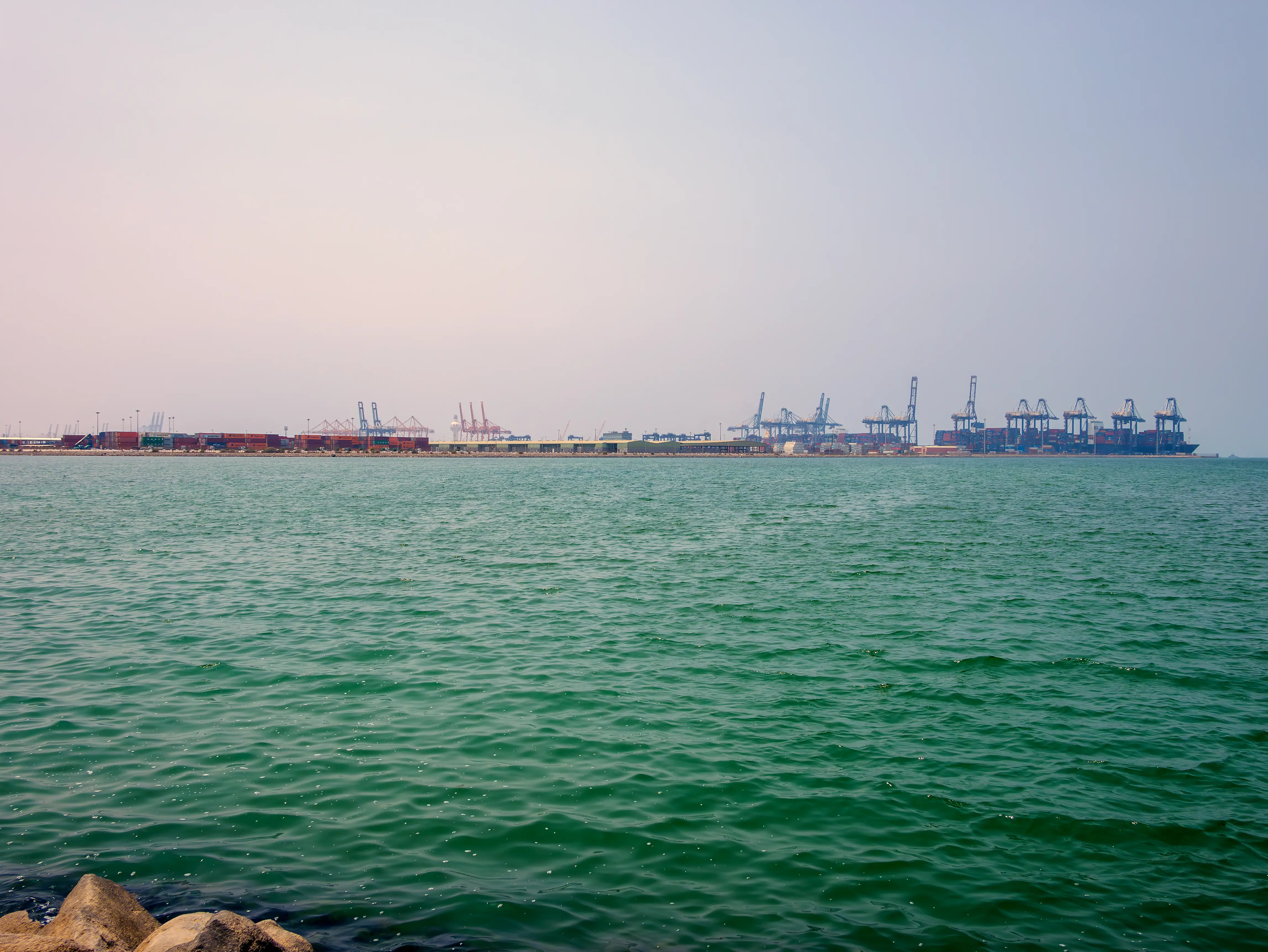
One consignment, multiple points of failure
Rimal Horizon Engineering was responsible for parts of an infrastructure complex in western Saudi Arabia. Its principal equipment came from several international manufacturers: power modules, prefabricated structures and machinery whose size or weight ruled out routine containerised shipping.
The construction schedule depended on these units arriving in sequence. If one module arrived late, the reserved crane, installation team and downstream works would also have to be rescheduled. Rimal awarded the Red Sea Project Cargo Command contract to EMARAS to manage those interdependencies.
The contract value was $596,800. EMARAS had to design a feasible route for every unit from the factory gate to the installation site, integrating sourcing, ocean transport, discharge and inland movement into one programme.
Cargo engineering before freight procurement
EMARAS's first deliverable was an engineered cargo register. For every item, it recorded packed dimensions, gross weight, centre of gravity, approved lifting points, impact sensitivity and protection requirements. These data underpinned the choice of transport method and handling equipment.
Purchase orders were aligned with the construction schedule. “Factory ready” and “required at installation site” were treated as distinct dates; the interval had to accommodate inspection, inland pickup, the sea voyage, inbound formalities and final inland transfer. Units on the construction critical path received their own priority.
Selecting the transport solution
For out-of-gauge cargo, EMARAS compared options by vessel capacity, loading feasibility, lashing and securing requirements, and arrival window. A commercial offer was assessed against end-to-end executability and the consequences of delay, not ocean freight rate alone.
Before each dispatch was approved, the packing and in-transit securing plan was reviewed with the responsible technical parties. The loading programme identified which item had to depart first, which required dedicated transport and which could be consolidated to reduce the number of voyages.
Arrival in Jeddah
At Jeddah Islamic Port, vessel arrival had to be synchronised with document readiness, discharge resources, receiving space and the inland exit plan. EMARAS coordinated this flow among the manufacturer, carrier, authorised customs representative, specialist service providers and Rimal's project team.
Each item had a file covering technical specifications, commercial value, package list, transport particulars and handling requirements. Any difference between the physical equipment and its documentation was referred to the responsible party for correction before arrival.
EMARAS was neither the port operator nor the lifting contractor. Its responsibility was to ensure that authorised operators, documents and schedules were aligned before the consignment arrived.
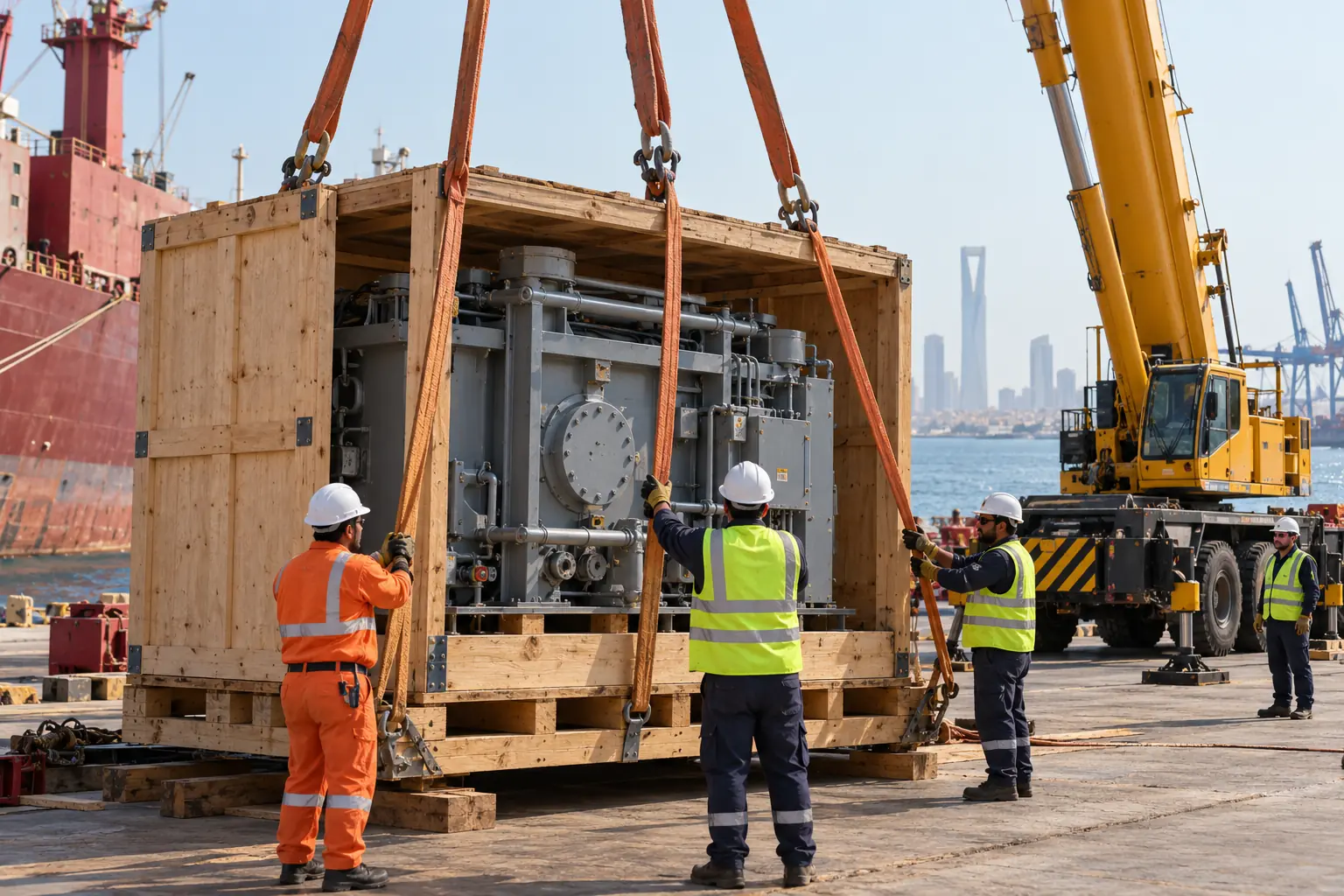 Operational illustration · created for this project profile
The hardest leg came after the port
Getting an out-of-gauge unit out of the port did not mean it had reached the project. EMARAS planned for an initial inland route assessment, dimensional restrictions, turning points, vehicle capacity and suitable movement times. Final engineering reviews and required permits were handled by specialist parties and the relevant authorities.
Deliveries followed the installation sequence. An early unit might require additional storage and protection; a late unit could stop several contractors' work. The governing measure was therefore not to deliver every item as quickly as possible, but to deliver each one when it could be used in construction.
Project decision room
For each unit, EMARAS maintained a control view with three dates: the manufacturer's committed date, forecast delivery into Jeddah and required date at the installation site. The spread between them showed the schedule float for each item.
If a module's production slipped or the vessel schedule changed, the EMARAS team assessed the effect on the project's critical path. Options such as resequencing dispatches, using an alternative transport route or adjusting the installation programme were then presented to Rimal for decision.
Execution programme
- Months 1–2 | Cargo definition: collect technical data, classify equipment and align purchasing with the construction sequence.
- Months 3–4 | Route design: select the transport method, undertake initial inland-route review, set packing requirements and plan dispatch windows.
- Months 5–9 | Shipping waves: monitor manufacturer readiness, control documents, coordinate Jeddah arrival and manage staged deliveries.
- Months 10–11 | Completion and close-out: deliver remaining items, reconcile receipt records and capture operational lessons.
Contract value
| Work package | Value |
|---|---|
| Engineered cargo register and critical-path analysis | $92,000 |
| Transport solution design and service provider assessment | $118,000 |
| Dispatch programme command and multi-party coordination | $144,000 |
| Document control and Jeddah arrival planning | $96,000 |
| Inland transfer sequence and site delivery design | $83,000 |
| Change management, reporting and close-out | $63,800 |
| Total service contract value | $596,800 |
The contract covers EMARAS planning and management services. It excludes equipment prices, vessel freight, discharge services, inland transport, insurance and third-party charges.
Project signature
In Red Sea Project Cargo Command, EMARAS managed a chain of interdependencies. Each unit had its own manufacturing programme, transport constraints and required arrival date on site. EMARAS brought these elements together so that a delayed factory decision would not become a costly stoppage at the installation site.
EMARAS — Every critical load has a critical path.