A contract measured in time
Nuraiya Food Systems supplied specialty food products to a network of hotels, catering operators and premium retailers in Qatar. Growing demand had connected the company to three new sourcing markets; more suppliers also meant more potential points of cold-chain failure.
For Nuraiya, a container's arrival at the port was not the end of the assignment. Goods had to travel at the correct temperature, their storage history had to be reviewable, documents had to be ready before arrival, and deliveries had to reach the distribution centre within a defined time window. A short interruption could reduce saleable inventory and change several customer schedules at once.
Nuraiya entrusted EMARAS with the design and management of the Hamad Cold-Chain Continuity Programme. The $548,000 contract covered process design and management, not the purchase of goods or the cost of transporting them.
Supply network design
EMARAS first classified products by permissible temperature range, remaining shelf life, sensitivity to delay and customer priority. For each group, it specified packing requirements, quality records, acceptance conditions and the maximum allowable transfer time between stages.
Suppliers were evaluated on more than price. Their ability to prepare consignments on schedule, provide temperature records and preserve product quality through delivery also informed purchasing decisions. Key orders were planned across multiple origins so that a delay on one lane would not halt Nuraiya's supply.
Reefer container control
Before loading, the technical condition and temperature settings of each reefer container were matched to the product specification. Container and seal numbers, set temperature, loading time and temperature-logger information entered the shipment file.
EMARAS defined a Temperature Integrity Record for every consignment so that the quality team could review the product's temperature history in transit. A temperature excursion did not automatically mean rejection. It triggered an assessment through which acceptance, quarantine or rejection could be decided on the basis of product type and recorded evidence.
Hamad Port arrival plan
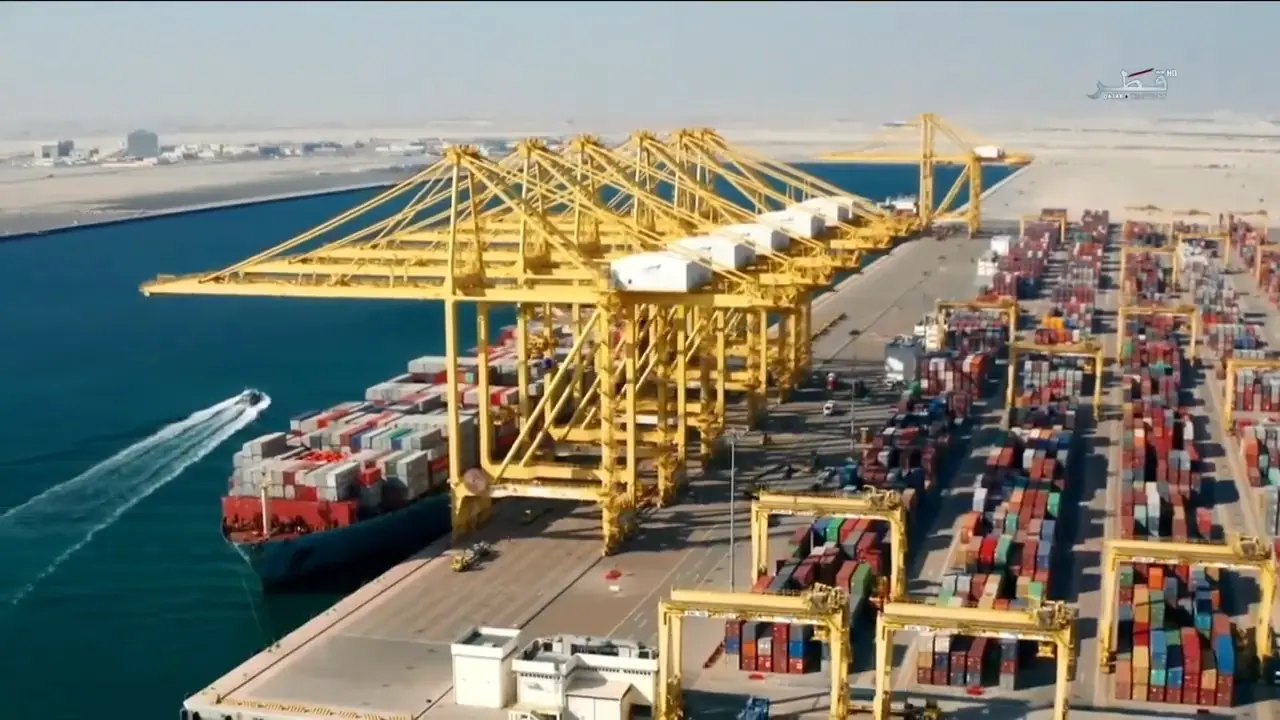
Arrival times were coordinated with Nuraiya's distribution-centre receiving capacity. Commercial information, packing lists, origin documents and product-specific records were reviewed before the vessel arrived and made ready for action by authorised parties.
At arrival, EMARAS prioritised cold-chain continuity: coordinating container release, suitable onward transport, transfer to storage and recording the handover temperature. A change in the vessel's ETA was carried through to receiving plans, staffing and customer dispatch dates.
EMARAS did not perform formal port operations or make decisions for regulatory authorities. Its role was to coordinate commercial and logistics parties so that each step proceeded with complete information and a clear schedule.
 Operational illustration · created for this project profile
Shelf-life-led inventory management
At the distribution centre, dispatch priority followed FEFO — first-expired, first-out. Inventory was displayed by production date, expiry date, quality status and allocated customer order.
The model allowed Nuraiya to separate saleable stock from goods awaiting review. Before confirming a large order, the sales team could see how much product was genuinely ready for delivery and how much shelf life remained.
Disruption response protocol
A defining part of the contract was the design of supply-continuity scenarios. EMARAS developed separate decision paths for vessel delay, refrigeration failure, temperature variance, missing documents and a sudden demand surge.
Each scenario identified three outputs: a decision owner, an action window and an alternative. If a consignment fell out of plan, the team could assess a backup supplier, buffer stock or a revised customer delivery sequence without relying on last-minute emergency calls for every decision.
Contract structure
| Work package | Value |
|---|---|
| Supply network design and supplier assessment | $98,000 |
| Transport standards and temperature-control records | $85,000 |
| Reefer consignment and inbound operations coordination | $172,000 |
| Inventory, allocation and FEFO system design | $78,000 |
| Supply continuity scenarios and disruption management | $65,000 |
| Training, reporting and process transfer | $50,000 |
| Total contract value | $548,000 |
Point of distinction
At Jebel Ali, EMARAS addressed control of trade flows and documents. At Hamad Port, the issue was preserving product quality against time and temperature. Here, the value of a consignment depended not only on its arrival, but on whether it still met the promise made to the customer at handover.
EMARAS — Integrity across the journey. Confidence at the point of delivery.