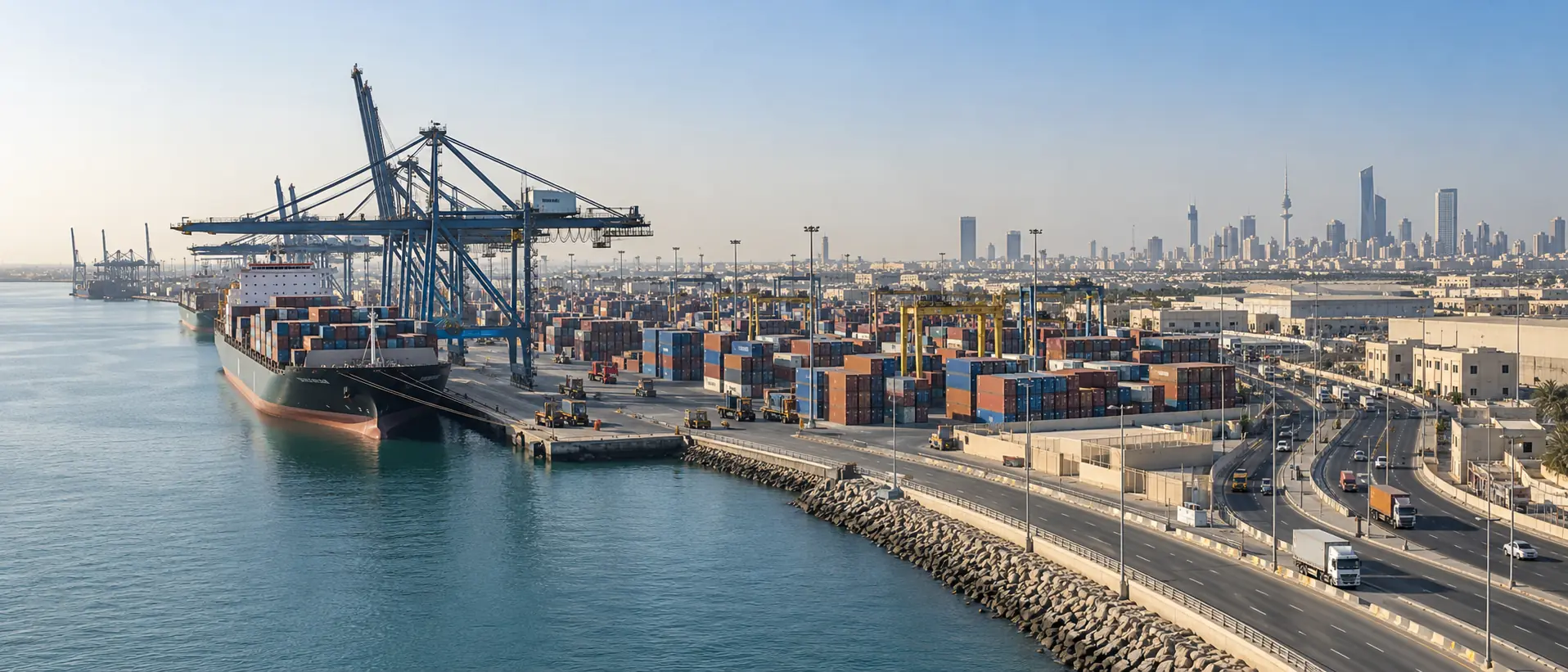
Architecture of inbound flow, allocation and launch for seasonal goods through Shuwaikh Port
Trading partner: Saham Retail Company. Project location: Kuwait, with seaborne entry centred on Shuwaikh Port. Contract value: $513,000. Execution period: 9 months. Programme scope: 210 SKUs, 42 planned containers, three sourcing origins and a network of 16 stores plus an online sales channel.
The commercial challenge
Saham Retail Company was preparing to expand its home and lifestyle assortment in the Kuwaiti market. Purchase orders were placed with suppliers in China, Türkiye and Italy, but each supplier had a different production calendar, packing method and delivery lead time. Meanwhile, advertising and store merchandising had been scheduled for a defined launch window.
The principal risk was not simply a late vessel. If high-selling items arrived after the campaign began, marketing spend would be consumed before the full assortment was available. If all goods arrived too early, the company's capital would remain tied up in inventory for longer. EMARAS was tasked with balancing inbound timing, sourcing cost, customs readiness and speed to market.
Shuwaikh Port was selected as the programme's maritime point of entry. According to the Kuwait Ports Authority, it is the country's principal commercial port.
EMARAS execution architecture
01 / Demand map and commercial SKU priorities
EMARAS divided the 210 SKUs into three groups according to margin, expected sales velocity, role in the campaign and time sensitivity: campaign launch items, basket-building assortment and replenishable lines. It then set each group's required date in store and worked backward from the launch date to determine the shipping plan.
02 / Synchronising three sourcing origins
Each supplier was assigned control gates for purchase-order confirmation, production completion, pre-shipment inspection, document readiness, handover to the carrier and cargo departure. EMARAS assessed consolidation opportunities so goods with similar launch dates could move in one shipping wave without allowing one producer's delay to hold back the entire wave.
03 / Trade data control and import readiness
Before each consignment moved, product particulars were reconciled against the commercial invoice, packing list and transport data. Ambiguities in goods descriptions, package counts or declared values were referred to the supplier for correction. Tariff classification and import requirements were reviewed with authorised specialists and customs brokers so operational decisions could be based on complete records.
04 / Landed-cost management
EMARAS developed a landed-cost model for each product group, bringing together purchase price, international freight, import-related charges, inland transport and attributable distribution costs. Before launch, Saham's management could examine each group's margin and the effect of freight-rate changes on pricing.
05 / Inventory allocation after arrival
Following arrival through Shuwaikh Port, goods were not distributed to stores under a fixed allocation. EMARAS designed a model that considered the sales capacity and location of each branch, current inventory and online orders. For priority SKUs, minimum acceptable stock and alert points were set so transfers among branches could occur before shelves ran empty.
06 / Control room and management reporting
An operational dashboard displayed each order's status from supplier to final destination: “In production,” “Ready to ship,” “In transit,” “In import process,” “Ready for distribution” and “On sale.” Delays affecting the campaign date were reported separately to the commercial, logistics and sales teams so each could make decisions from the same version of the data.
Contract value detail
| Workstream | Service scope | Value |
|---|---|---|
| Demand analysis and launch assortment design | Prioritization of 210 SKUs, demand forecasting and launch calendar | $72,000 |
| Supplier management | Scheduling and monitoring production and preparation gates across three origins | $90,000 |
| Freight planning and consignment consolidation | Shipping-wave timing and the operating plan for 42 containers | $78,000 |
| Foreign trade data and document control | Product and document reconciliation, discrepancy handling and specialist import coordination | $85,000 |
| Landed-cost and inventory allocation model | Cost-to-destination calculation and distribution plan for stores and online orders | $96,000 |
| Dashboard and reporting system | Indicator design, order-status visibility and exception reporting | $59,000 |
| Training and operational deployment | Training of commercial and logistics teams, documentation and process handover | $33,000 |
| Total contract value | $513,000 |
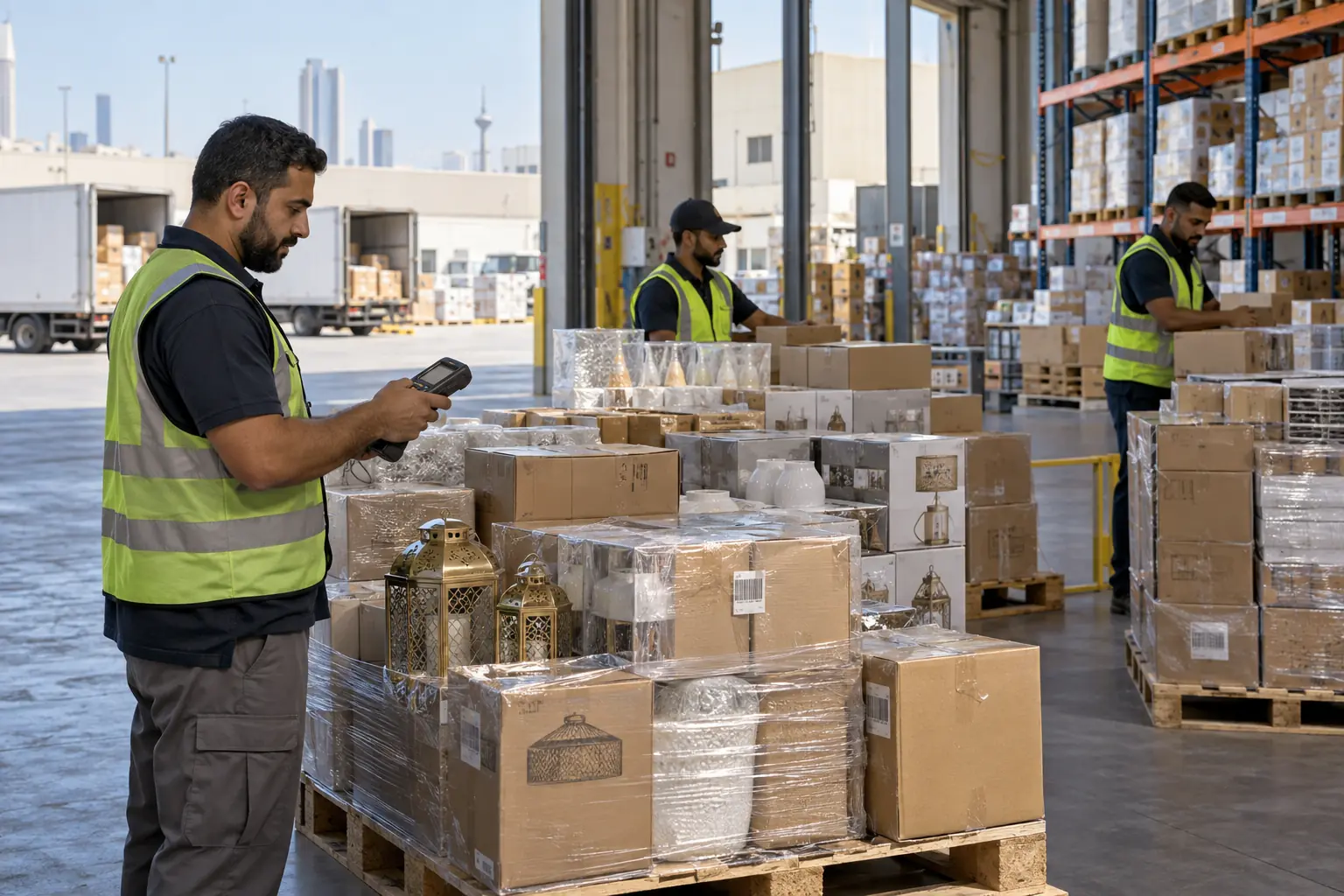 Operational illustration · created for this project profile
Project outcome
By the end of the execution period, Saham Retail Company was managing inbound goods and their retail launch as one programme instead of treating purchasing, transport and sales separately. Success was not measured solely by containers reaching Kuwait. The governing measure was whether priority products were available in the right sales channel before the demand window opened.
The programme allowed the team to assess document readiness, transit times, working capital and sales requirements together when planning the retail launch.