Commercial brief
Asterion Pacific Metals procured industrial metals from Asian producers and supplied customers across Gulf markets. Its business depended on disciplined working-capital turnover: each parcel had to be received, verified, allocated and released without allowing documentation or inventory discrepancies to delay payment.
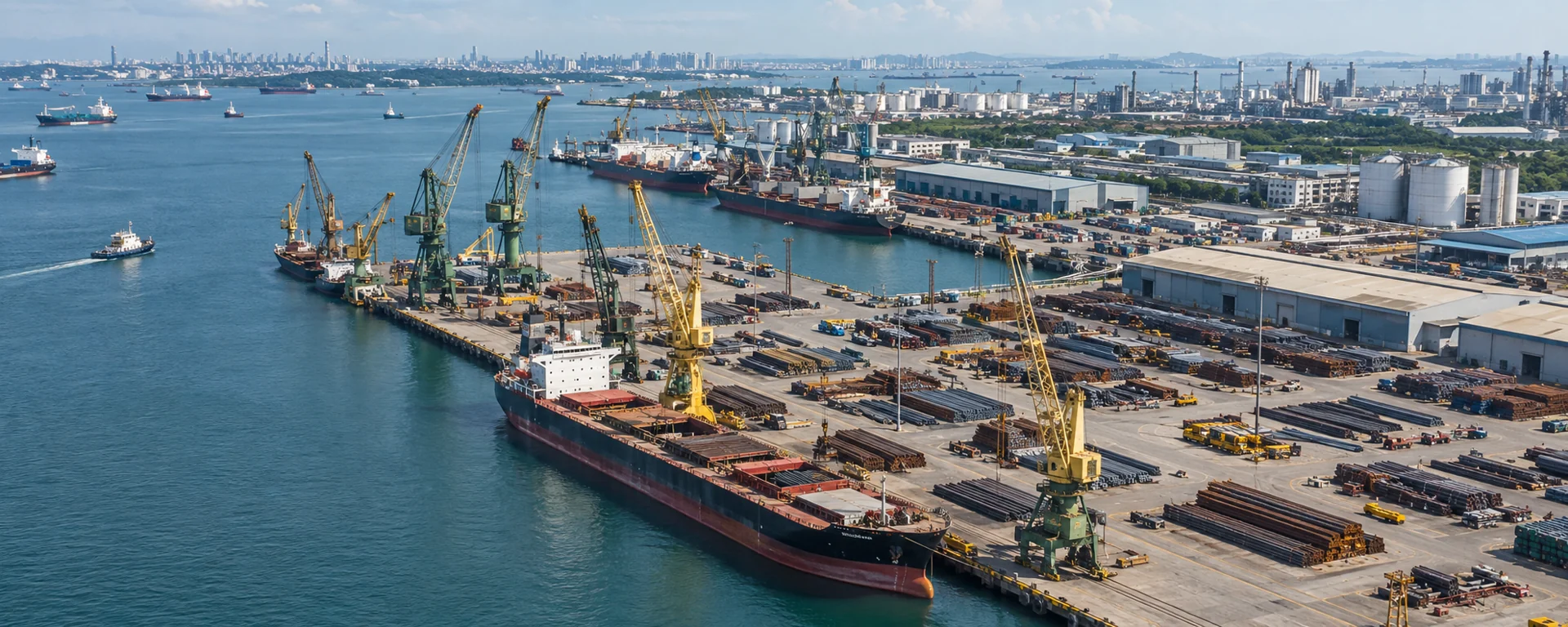
The weakness became visible in a 140-tonne steel consignment. Goods had been reserved for a buyer, yet the packing record did not reconcile with the physical breakdown in storage. Asterion commissioned EMARAS to make cargo release conditional on the simultaneous confirmation of physical inventory, contractual allocation and the relevant trade documents. Jurong Port formed the project’s operating anchor.
EMARAS mandate and execution
Transaction-level inventory control. EMARAS created a transaction record connecting seller, buyer, commodity, contracted weight, storage location, payment status and final destination. Stock was classified as received, under review, allocated or cleared for delivery. Physical presence alone did not constitute authority to sell or dispatch.
Three-way reconciliation. Purchase and sales terms, warehouse records and transport documents were checked against one another for all 14 consignments. Variances in weight, specification, package references or counterparty details were assigned to an owner before a delivery instruction could be issued.
Documentary payment readiness. Each transaction carried a documentary checklist and submission timeline. Invoice, origin, weight, quality and transport data were reviewed for consistency with the commercial terms, reducing the risk that a shipment ready for movement would still be held up by a discrepancy in the payment file.
Commercially led cargo release. EMARAS sequenced dispatch around customer delivery obligations, storage cost, settlement status and document readiness. If one transaction remained unresolved, another cleared consignment could proceed without placing the entire export schedule on hold.
Margin and capital visibility. Transaction economics combined acquisition cost, storage, handling, freight and delay exposure with the agreed sale price. A management dashboard distinguished capital tied up in received stock, allocated stock and transactions ready for settlement.
Contract allocation
| Workstream | USD |
|---|---|
| Transaction-file architecture | 38,000 |
| Inventory reconciliation and release controls | 47,000 |
| Trade-document matching | 34,000 |
| Jurong cargo coordination | 41,000 |
| Cost and margin model | 28,000 |
| Transaction and working-capital dashboard | 45,000 |
| Training and process handover | 29,000 |
| Total contract value | 262,000 |
Strategic outcome
Asterion could identify each parcel's inventory position, commercial allocation, document status and readiness for dispatch. Port movements and settlement decisions followed the same transaction record, giving management a clearer view of working capital.
 Operational illustration · created for this project profile