Commercial brief
Aruna Woven Living had secured orders to furnish hospitality and retail spaces for Gulf buyers. Its rattan portfolio included chairs, tables, screens and decorative products. Each buyer required a specific combination of designs, finishes, dimensions and quantities, while production was distributed among four workshops with different completion dates and packing practices.
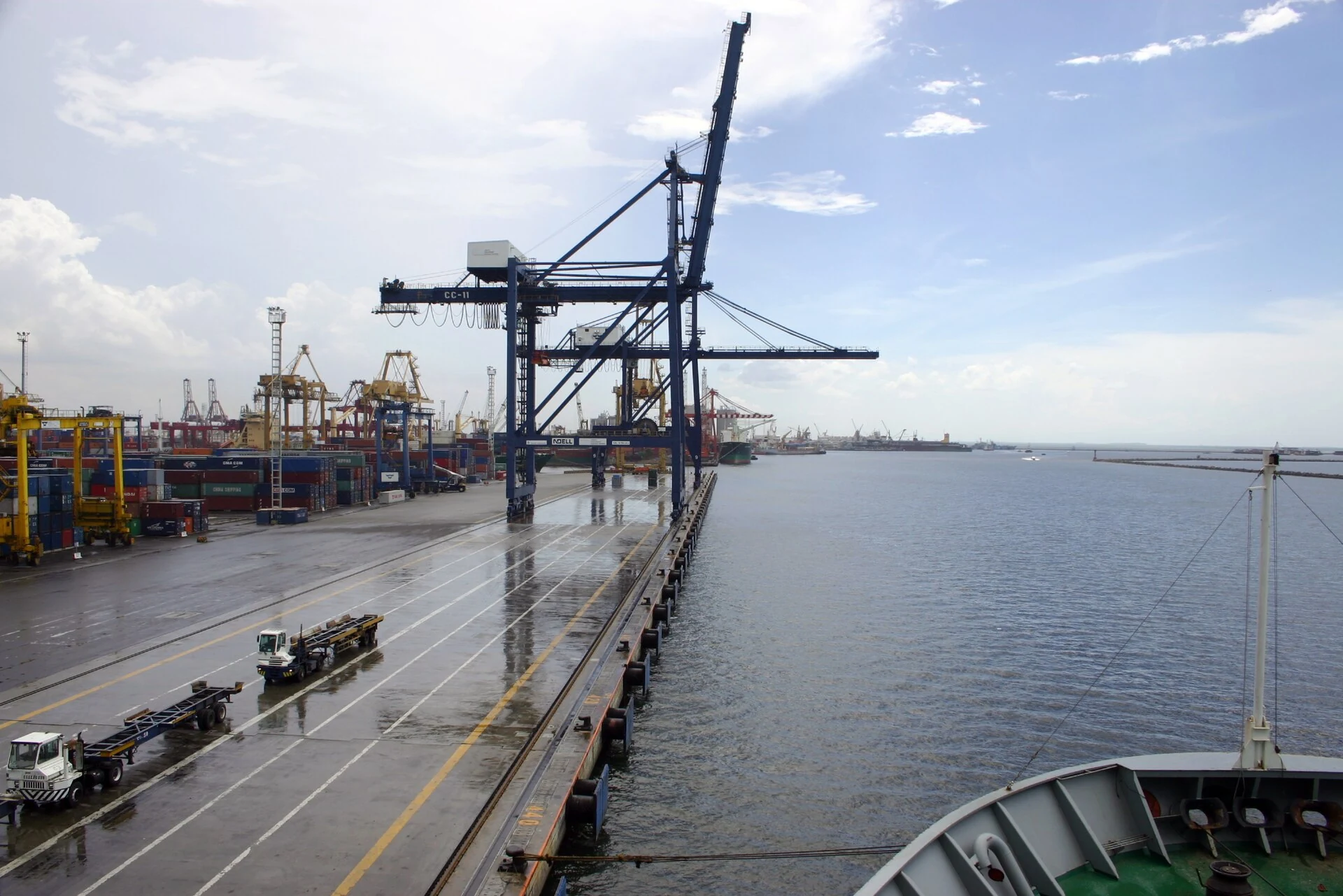
Aruna commissioned EMARAS to connect production readiness, acceptance standards, export packing and container loading. The project’s central concern was preservation of commercial value: pressure, movement or moisture during ocean transport could damage the appearance of a premium product before its buyer had received it. Tanjung Priok in Jakarta was the chosen maritime exit.
EMARAS mandate and execution
Order and production mapping. EMARAS created a master record for 180 product variants, linking SKU, workshop, dimensions, finish, quantity, buyer and delivery date. A buyer collection was declared ready only when its required complementary items were complete, preventing partial dispatch of a coordinated furnishing set.
Common acceptance criteria. The four workshops adopted a shared receiving checklist covering dimensions, finish, assembly, accessory counts and visible condition. Items with discrepancies were returned for correction or replacement before entering the approved loading pool.
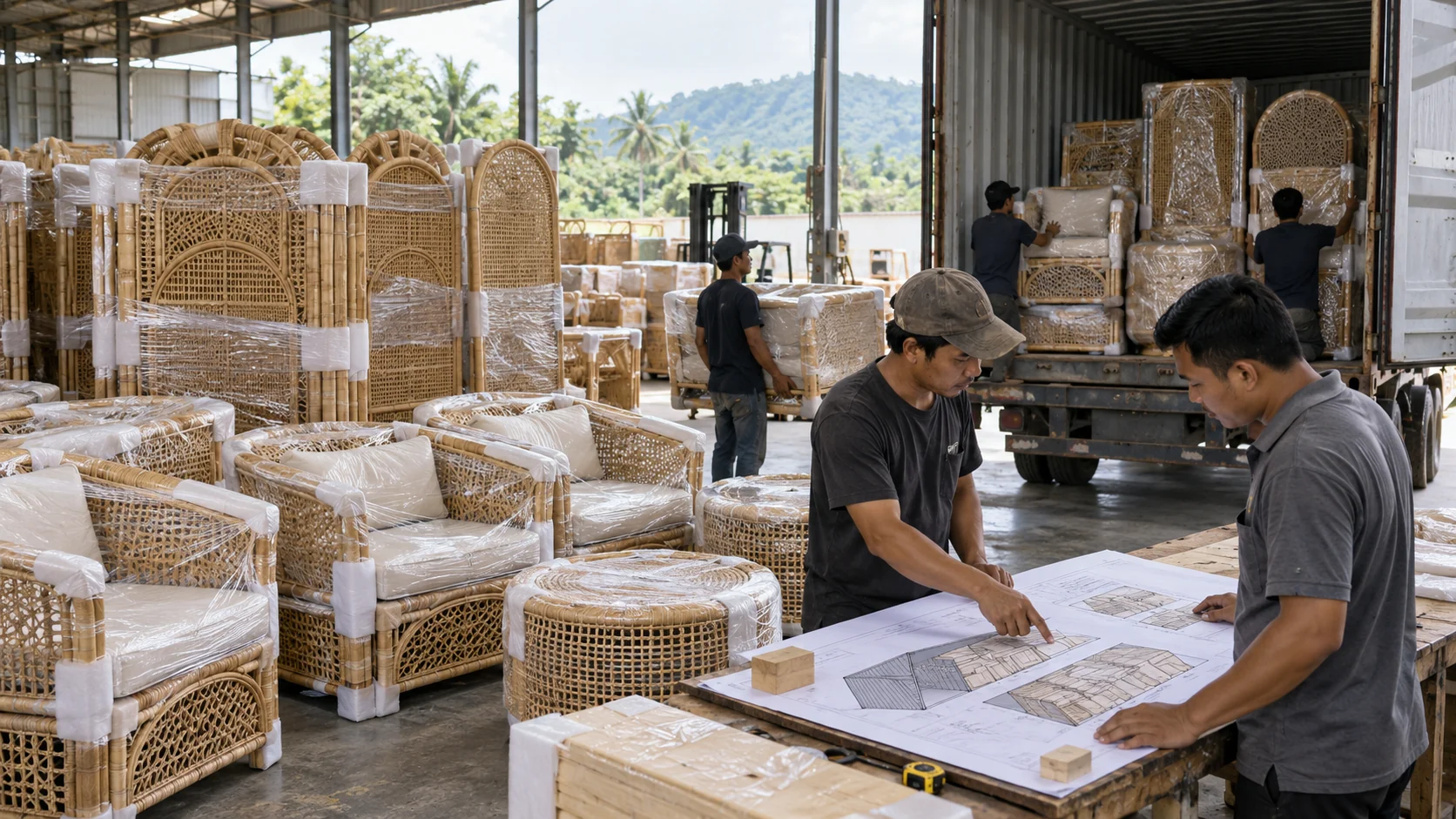
Ocean-ready packing. Packing rules accounted for shape, contact points, surface sensitivity and safe stacking. EMARAS also placed container dryness and interior-condition checks at the release gate. The objective was to use space effectively without increasing damage exposure or complicating unloading.
Consolidation and load maps. Goods were counted and segregated by buyer at a consolidation point. A load map for each of 18 containers showed the position of heavier packages, fragile items and customer sets. Package references were connected to the inventory list and container identifier.
Export file and exception control. Package counts, commodity descriptions, values and buyer details were reconciled across invoices, packing lists and transport data before port delivery. Goods with finish, accessory or packing exceptions were removed from the original loading list until corrected and approved again.
Contract allocation
| Workstream | USD |
|---|---|
| Order and production planning | 19,800 |
| Quality acceptance and inspection | 22,400 |
| Export packaging engineering | 25,600 |
| Consolidation and inventory traceability | 18,300 |
| Load planning for 18 containers | 21,700 |
| Export documents and coordination | 16,900 |
| Reporting, training and process handover | 17,000 |
| Total contract value | 141,700 |
Strategic outcome
Aruna could trace each buyer order through its workshop, acceptance decision, package and outbound container. Quality controls continued through packing, consolidation and loading, with the buyer receiving records that matched the dispatched goods.
 Operational illustration · created for this project profile