Amir Parvini
Deputy Chief Executive Officer & Chief Operating Officer
EMARAS International Exim Holding
International Trade Leadership · Global Market Development · Supply Chain Governance · Logistics & Customs Coordination
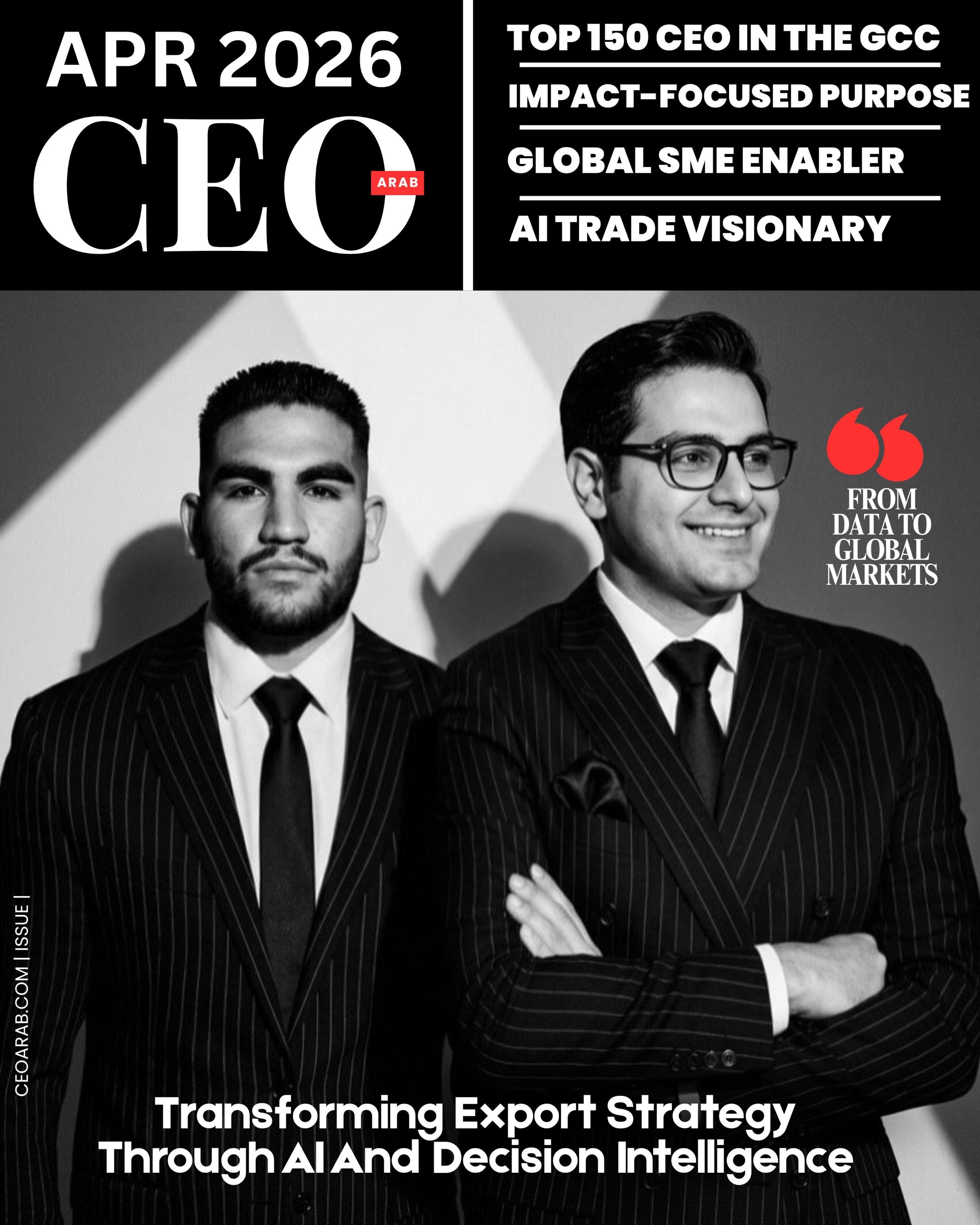
Executive profile
Amir Parvini is an international trade executive specialising in market development, cross-border operations and supply chain management. He works across Europe, the Gulf and Southeast Asia, turning commercial agreements into practical procurement and delivery programmes.
As Deputy Chief Executive Officer and Chief Operating Officer of EMARAS International Exim Holding, he directs operational coordination, oversees delivery partners, and connects corporate strategy with procurement, logistics, and customer fulfilment.
His international portfolio spans Spain, Kuwait, Oman, Singapore, and Thailand, encompassing industrial market entry, retail supply chains, regional spare-parts distribution, metals trade control, and automotive exports.
The five EMARAS programmes within this portfolio carry a combined contract value of USD 1,621,000, representing contracted services and programme delivery, independently of the underlying merchandise value.
Parvini’s core expertise is the alignment of commercial decisions with operational capability—from supplier selection and landed-cost assessment to documentary readiness, customs coordination, inventory allocation, and contractual delivery.
Within EMARAS, he coordinates commercial teams, suppliers, transport providers, customs representatives, and distribution partners around defined execution priorities.
Clear accountability, dependable information, and timely decisions underpin his management approach. Every order requires an executable plan, every consignment requires traceability, and every discrepancy requires an accountable owner and a resolution pathway.
Spain — Industrial Market Expansion Through Valencia
In Spain, Parvini’s portfolio includes the Valencia Market Access Programme: a USD 246,000, nine-month contract for Ibernova Motion Works.
The programme established a structured commercial route for industrial motion-control modules and automation components entering three Asian markets.
Its mandate integrated market selection, distributor qualification, export pricing, contractual obligations, and initial shipment execution through the Port of Valencia.
Industrial demand, competitive positioning, product requirements, and receivables risk determined the market-entry sequence. Each target market had defined investment criteria and a corresponding development plan.
Destination-cost modelling established the basis for export negotiations and profitability assessment. Packaging, inland transport, ocean freight, insurance assumptions, and distributor margins formed an integrated commercial calculation.
Distribution partners were assessed against technical sales competence, access to industrial customers, financial capacity, and after-sales support.
The programme delivered a repeatable export-development framework connecting market selection and commercial negotiation with production readiness, quality approval, documentation, and delivery.
Kuwait — Seasonal Supply Chain and Retail Launch Coordination
His Kuwait portfolio includes the USD 513,000, nine-month retail supply chain programme for Saham Retail Company.
The engagement integrated procurement from China, Türkiye, and Italy with maritime entry through Shuwaikh Port and distribution across the client’s retail network and online sales channel.
Three commercial priorities governed execution: merchandise arrival timing, inventory capital exposure, and the seasonal sales window.
The EMARAS programme linked market demand with supplier production schedules, shipment sequencing, documentary readiness, and distribution planning.
A landed-cost model supported pricing decisions and gross-margin control. Acquisition costs, international freight, import-related charges, inland movement, and distribution expenses were assessed within a common financial framework.
Inventory allocation reflected branch sales capacity, geographic coverage, actual stock availability, and online demand.
The result was a unified purchasing, shipping, customs-readiness, and retail-release plan, designed to position priority merchandise in the appropriate sales channel when demand materialised.
Oman — Regional Spare-Parts Network Development Through Salalah
In Oman, his portfolio includes the Salalah Service Parts Network, a USD 430,000, ten-month contract for Dhofar Atlas Equipment.
The contract covered the design of a regional spare-parts network supporting pumping equipment and mechanical systems in Oman and East African markets.
Installed-equipment analysis, demand forecasting, technical component identification, inventory policy, and inbound supply and re-export coordination formed the programme’s operating structure.
Operational criticality, consumption patterns, replenishment lead times, and the consequences of stock unavailability determined component priorities. Capital allocation and inventory levels followed those priorities.
A master parts catalogue consolidated manufacturer references, internal identifiers, and equipment compatibility into a consistent technical and commercial record.
Salalah served as the network’s allocation point for domestic orders, regional stockholding, and onward shipments.
The customs status and re-export requirements of each consignment were assessed with authorised parties according to destination, buyer, and contractual conditions.
The programme established a coherent process connecting technical approval, stock availability, transport selection, and delivery records. The resulting support network had defined inventory policies, consistent part identification, and predetermined response procedures.
Its commercial value lay in strengthening after-sales capability while bringing greater discipline to working-capital deployment.

Singapore — Commercial and Operational Control of Metals Transactions
His Singapore portfolio includes Jurong Metals Trade Control, a USD 262,000, eight-month contract for Asterion Pacific Metals.
The contract integrated industrial metals procurement from Asian producers with inventory control and cargo-release coordination through Jurong for Gulf buyers.
The operating model reconciled physical stock with purchase and sales contracts, warehouse records, payment status, and transport documentation.
A consistent transaction file and an approved consignment status governed dispatch authorisation. Received, allocated, under-review, and delivery-ready inventory remained separately identifiable and traceable.
Acquisition, storage, handling, freight, and potential delay costs were incorporated into transaction profitability and working-capital analysis.
The programme delivered greater clarity across inventory ownership and allocation, buyer commitments, and settlement readiness. Each consignment had a defined commercial record and clear conditions for dispatch and transaction progression.
Thailand — Automotive Export Integrity and Delivery Coordination
In Thailand, his portfolio includes Vehicle Export Integrity, a USD 170,000, seven-month contract for Siam Vantara Mobility.
The programme covered automotive exports from Thailand’s Eastern Economic Corridor through Laem Chabang Port to buyers in the United Arab Emirates, Oman, and Qatar.
Execution depended on the alignment of customer orders, allocated vehicles, recorded vehicle condition, export documentation, and roll-on/roll-off vessel schedules.
Each vehicle identifier established a direct connection to the buyer, approved specification, destination, and designated sailing.
Pre-dispatch controls and documented handovers maintained information continuity from preparation through port receipt and loading. Vehicles with unresolved discrepancies remained outside the approved shipping schedule until corrective action was complete.
The programme delivered a coordinated export process that maintained consistency between the sales commitment, the vehicle dispatched, and the information required by the importing partner.
Business Development and Commercial Expertise
Parvini works on both market development and the delivery of international orders. His responsibilities include demand assessment, counterparty evaluation, commercial terms, cost control, trade documentation and logistics coordination.
Cost visibility, supplier alignment, inventory accuracy, customs readiness, and delivery reliability are central measures of performance within this approach.
His expertise also encompasses export branding, digital market-entry strategy, consumer behaviour analysis, and international sales development.
His professional experience includes consulting and specialist engagements involving DP World Trade Solutions and American Woodmark Corporation, alongside the launch of AdPulse Studio and the development of FreelanceGrowth.
His wider activities include export-readiness programmes, international brand campaigns, and branding and sales-funnel consultancy for more than thirty clients.
CEO Arab Magazine has covered his commercial collaboration with Abolfazl Ghayedzadeh Mokhbolandi in international trade development, commercial negotiation, and market analysis.
Academic Profile and Research Contributions
Amir Parvini is a researcher in international marketing and business development and a candidate for the Chair of Marketing at the University of Arizona, United States.
His research focuses on enterprise growth, competitive advantage, organisational performance, and customer decision-making. These disciplines provide an analytical foundation for his work in market development and international commerce.
His academic portfolio includes co-authorship of three conference papers and two written research manuscripts.
His paper, “Internationalisation of Small and Medium-Sized Enterprises: The Role of Product Innovation, Market Intelligence, and Marketing Capabilities in Creating Sustainable Competitive Advantage,” examines the capabilities that support international business expansion. It was presented at the 11th National Conference on Modern Studies and Research in Humanities, Management and Entrepreneurship of Iran in 1404.
“From Justice to Loyalty: Examining Brand Trust as a Mediator Between Perceived Justice and Customer Loyalty” investigates the relationship between brand trust and sustained customer commitment. The research was presented at the 13th International Conference on New Perspectives in Management, Accounting and Entrepreneurship in 1404.
“Examining the Mediating Role of Job Involvement in the Relationship Between Strategic Human Resource Management and Organisational Performance from a Business Development Perspective: A Conceptual Review Based on Global Meta-Analyses” addresses the connection between human capital and enterprise performance. It was presented at the Fourth International Conference on Economics and Business Management in 1404.
Parvini is also a co-author of “The Impact of Digital Marketing Innovation on Firm Performance: Mediation by Marketing Capability and Moderation by Firm Size.”
His written research further includes “Click-Through Rate Prediction in Online Advertising: A Literature Review.”
These two manuscripts were co-authored with Abolfazl Ghayedzadeh Mokhbolandi and Dr Mehrdad Kabiri.
His academic and professional engagement also includes specialist events addressing export pricing, digital branding, trade innovation, and artificial intelligence in export intelligence.
Market analysis, customer understanding, and organisational capability assessment are fundamental to his commercial approach. Research and executive experience provide complementary foundations for these decisions.
Executive Perspective
At EMARAS, Parvini is responsible for carrying corporate strategy through to operations. He assigns responsibility to delivery partners, coordinates teams and monitors the commitments made to clients.
His management principle is clear: international credibility rests on precise commitments, sound decisions, and the sustained capacity to deliver.
His professional objective is to build international business on a strong operational foundation—supported by reliable intelligence, consistent documentation, coordinated logistics, and commercial relationships sustained through dependable performance.