Abolfazl Ghayedzadeh Mokhbolandi
Co-Chief Executive Officer (Co-CEO)
EMARAS International Exim Holding
International Trade Leadership · Export Market Development · Commercial Governance & Intelligent Decision Infrastructure
Executive leadership
Abolfazl Ghayedzadeh Mokhbolandi is Co-Chief Executive Officer of EMARAS International Exim Holding. He shares responsibility for corporate direction, develops international contracts and leads programmes covering sourcing, customs coordination, logistics and delivery. His wider work includes international business development and the design of export-intelligence infrastructure.
With more than eight years of professional experience in Gulf and Asian markets, he has built his approach around market understanding, commercial negotiation and the operating structure behind a contract. In his view, the value of an opportunity becomes clear when supply feasibility, market-entry costs, the responsibilities of each party and the capacity to fulfil commitments have been properly assessed.
As Co-CEO, Mokhbolandi shares chief executive responsibility with Abbas Parvini and works with EMARAS’s leadership on the selection of growth opportunities, the development of commercial relationships and the direction of the company’s project portfolio. He maintains continuity between initial negotiations and contract execution so that commercial agreements have a defined operational, documentary and managerial foundation.
His expertise lies where strategy meets execution: a decision about a market, supplier or transport route can affect margin, working capital, contractual obligations and corporate credibility at the same time. Risk management is therefore built into transaction design from the earliest stages of negotiation and planning.
International contract leadership
He provides executive direction for EMARAS projects in the United Arab Emirates, Qatar, Saudi Arabia, Australia, New Zealand and China. These six service contracts total USD 2,408,600 and cover planning, control, coordination and management. Merchandise and costs outside the agreed scope are accounted for separately.
United Arab Emirates | USD 675,000 Jebel Ali Trade Control contract
Mokhbolandi directed the commercial and management approach to the USD 675,000 Jebel Ali Trade Control contract with Meridian Gulf Trading. The programme brought international purchasing, document control and regional distribution into a common plan for managing customer commitments and shipments.
His focus was on connecting supply-contract terms with customs readiness, arrival schedules and delivery planning. This approach enabled EMARAS to assess documentary issues, transport changes and delay-related expenditure within a common commercial framework, with clear ownership and financial implications for each decision.
Within the programme, Jebel Ali served as the coordination point for supply and delivery commitments across Gulf markets. Mokhbolandi’s role was to direct that relationship at management level and maintain alignment between the customer’s commercial interests and the requirements of contract execution.
Qatar | USD 548,000 Hamad Cold-Chain Continuity contract
For the USD 548,000 Hamad Cold-Chain Continuity contract with Nuraiya Food Systems, Mokhbolandi focused on preserving food quality and commercial value throughout the supply chain. International sourcing, refrigerated transport and distribution were planned against the customer’s sales commitments.
He approached the mandate through continuity of supply and the ability to fulfil the contract, emphasising that purchasing and transport decisions must address acceptable product quality, market availability and destination receiving capacity together.
At executive level, his attention centred on supply diversification, the assessment of alternatives and the commercial consequences of disruption. This structure connected decisions about delays, alternative routing or revised deliveries with the information required to protect saleable inventory and maintain service to customers.
Saudi Arabia | USD 596,800 Red Sea Project Cargo contract
Under the USD 596,800 contract with Rimal Horizon Engineering, Mokhbolandi tied procurement and equipment transport to the construction schedule. Red Sea Project Cargo Command required coordination between manufacturers, specialist carriers and the customer’s project team through Jeddah Islamic Port.
His management priority was to assess transport decisions by their effect on the project as a whole. A proposal had to be considered against its price, executability, required delivery date at the installation site and the potential cost of interrupting subsequent activities.
His leadership role was to maintain that discipline in the contract’s principal decisions and address changes that could affect the delivery programme or the customer’s financial obligations. The approach brought purchasing, transport, customs coordination and site delivery into a coherent commercial programme.
Australia | USD 194,000 Fremantle Asset Recovery contract
For Westhaven Rotating Equipment Pty Ltd, Mokhbolandi directed the management approach to the USD 194,000 Fremantle Asset Recovery contract. The assignment covered the international repair-and-return cycle, with decisions assessed against asset value and the commitment to return equipment to service.
The project strategy connected cross-border movements, documentary readiness, customs coordination and the capacity of Perth repair facilities within a controlled programme. Any change in repair scope, cost or completion date had to be evaluated in relation to the commercial commitment to the customer.
His focus was on clear responsibilities, change control and continuity of decisions from equipment arrival through re-export. This approach connected logistics services to the customer’s central concern: managing the period of asset unavailability and securing its return on the agreed terms.
New Zealand | USD 229,800 Tauranga Dairy Trade Assurance contract
Mokhbolandi’s strategy for the USD 229,800 Tauranga Dairy Trade Assurance contract began with the requirements of Koru Meridian Ingredients Ltd’s buyers. The programme covered New Zealand dairy-ingredient exports to the United Arab Emirates, Saudi Arabia and Oman.
His management approach aligned sales commitments with product conformity, export-document readiness and the receiving factories’ supply programmes. Shipment decisions therefore required a complete commercial and operational basis, ensuring that allocated goods matched the conditions accepted by the buyer in the contract.
At leadership level, he oversaw changes affecting customer acceptance, delivery timing and continuity of supply. The engagement illustrates EMARAS’s approach to export development, in which market expansion is supported by the capacity to fulfil commitments consistently and reliably.

China | USD 165,000 Yangshan Supplier Assurance contract
For Shanghai Lanqiao Systems, Mokhbolandi directed the USD 165,000 Yangshan Supplier Assurance programme around the control of supply risk before export. Supplier performance and production conformity were assessed against the sales commitments made to destination buyers.
Yangshan Supplier Assurance connected purchasing information, quality records and shipment readiness into a common basis for decision-making. Its commercial objective was to identify and address discrepancies at origin, while corrective action remained less costly and less complex.
His management role was to assess supply issues through their contractual consequences, from correction and replacement costs to potential reshipment and disruption to the customer’s operations. This approach placed quality and logistics decisions in the service of protecting the export contract’s value.

Management approach and business development
Before expanding a commercial relationship, Mokhbolandi expects a clear assessment of delivery capacity, costs, responsibilities and information requirements. He uses these findings to decide whether an opportunity can be executed on the terms proposed.
He regards commercial negotiation as part of designing a long-term relationship. Payment terms, service scope, change-acceptance procedures and delivery obligations are instruments for creating durable cooperation and preventing ambiguity during execution.
In project management, his attention centres on matters requiring executive decisions: scope changes, cost escalation, threatened delivery dates, supplier dependency and divergence between contractual commitments and operational reality. Reporting acquires managerial value when it raises these issues promptly and presents executable options.
Cooperation with customs specialists, carriers and technical service providers takes place within clearly defined responsibilities. His role at EMARAS is to direct the commercial and managerial relationships across these parties and keep decisions aligned with the objectives of the contract.
Professional background and international market development
His expertise covers market entry, export branding, commercial negotiation and international business networks. He assesses competition, customer behaviour and local conditions when developing a market strategy.
A substantial part of his professional work concerns small and medium-sized enterprises. To establish a sustained international presence, these businesses require commercial structure, reliable information and the ability to fulfil commitments alongside a suitable product.
His approach strengthens capabilities within the organisation, from market selection and brand positioning to the organisation of commercial information, relationship development and export-process readiness. The objective is to establish a foundation on which a business can maintain and expand its position in the destination market.
Research leadership and institutional development
Mokhbolandi is Founder and Chief Executive Officer of the Strategic Marketing Studies Research Center, where he leads programmes in digital commerce, export intelligence and innovation. The work focuses on practical applications in business development and decision-making.
These programmes also address intelligent regulatory compliance and the relationship between AgriFood and AgriTech technologies, international standards and the requirements of overseas markets.
In collaboration with universities, innovation centres and policy-making bodies, his focus is on connecting research with economic implementation, enabling the resulting knowledge to inform development programmes, process improvements and commercial decisions.
His strategic activities extend to export-oriented industrial zones, technological infrastructure and the strengthening of regional and international supply chains. These areas connect industrial development with access to logistics networks and participation in global value chains.
His research gives particular attention to the influence of digital platforms, personalisation algorithms and data-driven marketing on consumer decisions and brand perception in international markets. These studies form part of his broader interest in the role of information and technology in commercial competitiveness.
EIDEF | Export Intelligence and Decision Enablement Framework
Mokhbolandi has contributed to the architecture and governance of EIDEF, the Export Intelligence and Decision Enablement Framework. The framework is designed to help organisations use commercial information in documented decisions with clear approval responsibilities.
EIDEF is conceived as a modular digital infrastructure that uses artificial intelligence and advanced analytics to support commercial decisions. Its focus is the stage before an organisation enters a binding financial or legal commitment, while alternatives can still be assessed and decisions revised.
Regulatory alignment, auditability, process standardisation and clearly defined human authority are central to the framework’s architecture. Information must have a traceable origin, the reasoning behind a decision must remain clear and responsibility for final approval must be explicit.
Mokhbolandi’s contribution in this field reflects his expertise in knowledge governance and the translation of research into operating mechanisms. The approach connects technology with practical management needs: more precise decisions, clearer accountability and better control of commercial consequences.
Industrial collaboration and professional engagement
His collaborations with Afagh Zarrin Iranian Dried Nuts Co. and Danesh Afzar Tejarat Mihan Co. cover sector-specific export development and digital business innovation, drawing on product knowledge, market research and decision-support tools.
He has also served as chair and secretary of national and international events addressing marketing, branding and export pricing, alongside scientific committee and peer-review responsibilities.
Knowledge dissemination and engagement with the next generation of trade professionals form another part of his work. This involvement focuses on sharing experience, strengthening decision-making skills and developing human capital in international business.
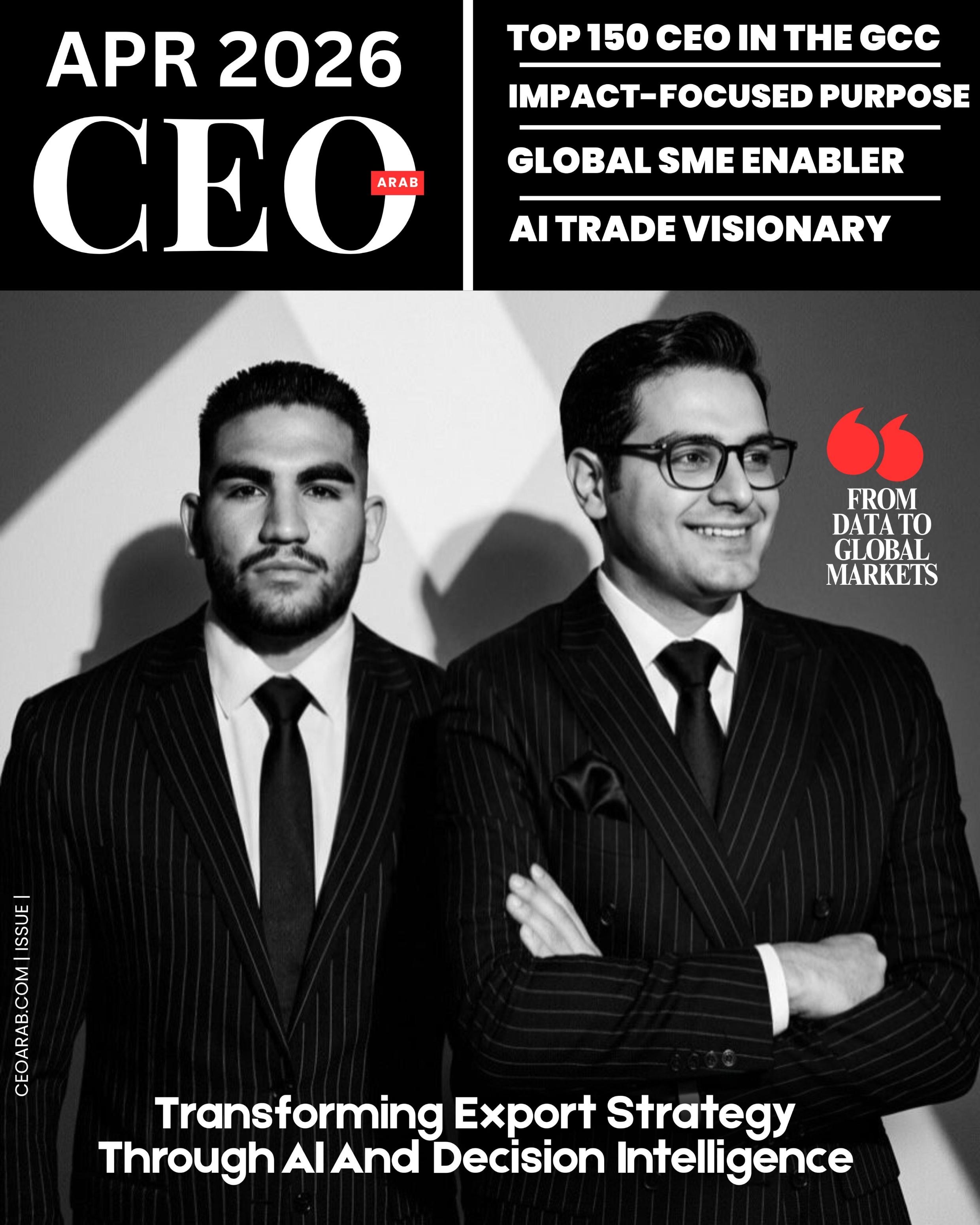
Mokhbolandi’s activities have been featured in Gulf Magazine and CEO Arab Magazine. Their coverage has addressed export development, EIDEF and his perspective on leadership and business transformation.
Authorship and business philosophy
Abolfazl Ghayedzadeh Mokhbolandi is the author of Business for the Glory of God, which examines entrepreneurship, faith, stewardship, integrity and economic responsibility.
In his view, commercial success carries responsibilities towards employees, business partners and society. Growth acquires lasting meaning when it creates trust, opens opportunities and delivers value beyond the financial outcome of an individual contract.
This perspective also informs his management approach: honouring commitments, maintaining clarity in decisions and respecting the responsibility others have entrusted to the organisation. Professional credibility is earned through the continuity of these choices in favourable and difficult conditions alike.
Across EMARAS, his research institution and his technology activities, a common direction is evident: developing businesses that understand their markets more deeply, base decisions on reliable information and possess the practical capacity to fulfil their international commitments.